Why Is My Basement Wet or Flooding?
Hydrostatic pressure, poor grading, cracks — learn the common causes of a wet or flooding basement in Wichita and what to do first.
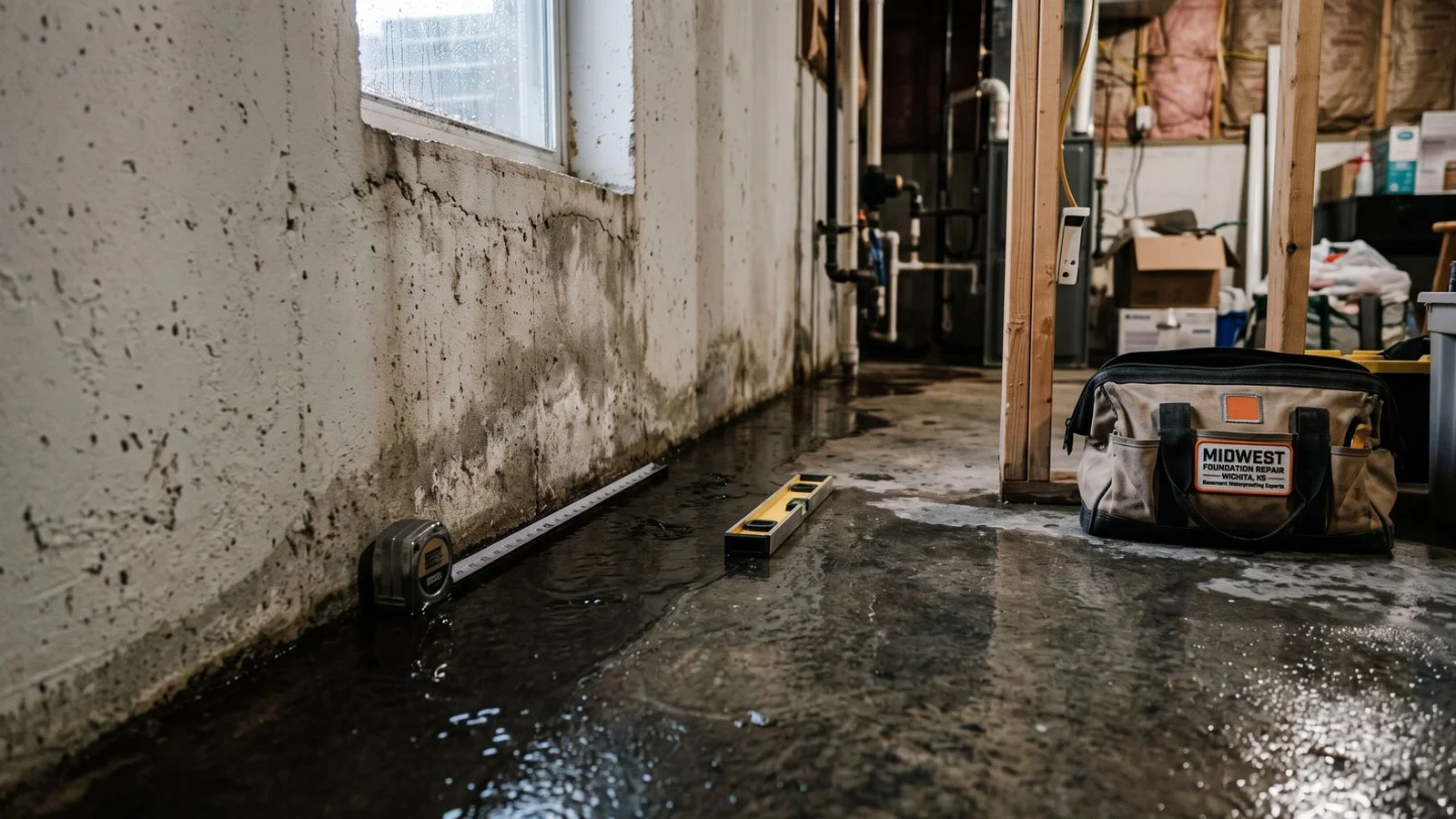
You know how frustrating it is to clean up a puddle in your lower level after a heavy storm. Our team at Wichita Foundation Solutions sees this cycle as one of the most common water in basement causes across south-central Kansas. A wet basement is usually one of four specific problems in disguise.
The right diagnosis makes the fix obvious and saves you from wasting money on the wrong solution.
We look at the 2026 data to understand these basement flooding causes properly. Finding the specific culprit requires paying close attention to the details. This guide breaks down the main issues and the exact steps for a dry home.
The four common causes
Almost every wet basement wichita call traces back to hydrostatic pressure, poor grading, downspout issues, or foundation cracks. National data shows nearly 60% of basements leak eventually, making it crucial to understand exactly what goes wrong. We see these four main factors driving water infiltration time and time again.
Saturated clay soil causes hydrostatic pressure against the foundation wall, pushing water through cold joints or porous concrete. The intensity of this pressure peaks during and just after heavy rain. Our inspections often reveal this dynamic is the primary driver of structural stress.
To simplify the diagnosis, review this quick comparison of the main culprits:
| Cause | How It Works | The Main Tell |
|---|---|---|
| Hydrostatic pressure | Saturated soil pushes water through pores and cold joints. | Water pushes hardest during rain. |
| Poor exterior grading | Ground slopes toward house, directing yard runoff to walls. | Persistent damp spots outside. |
| Downspout problems | Gutters dump directly against the foundation or overflow. | Pooling water at house corners. |
| Wall or floor cracks | Physical breaks in concrete allow pressure to force water inside. | Specific line of entry on the wall. |
Poor exterior grading slopes the ground toward the house, funneling yard runoff straight to your walls. Persistent damp spots along the exterior serve as the main warning sign. We always check soil saturation levels to rule out larger environmental factors.
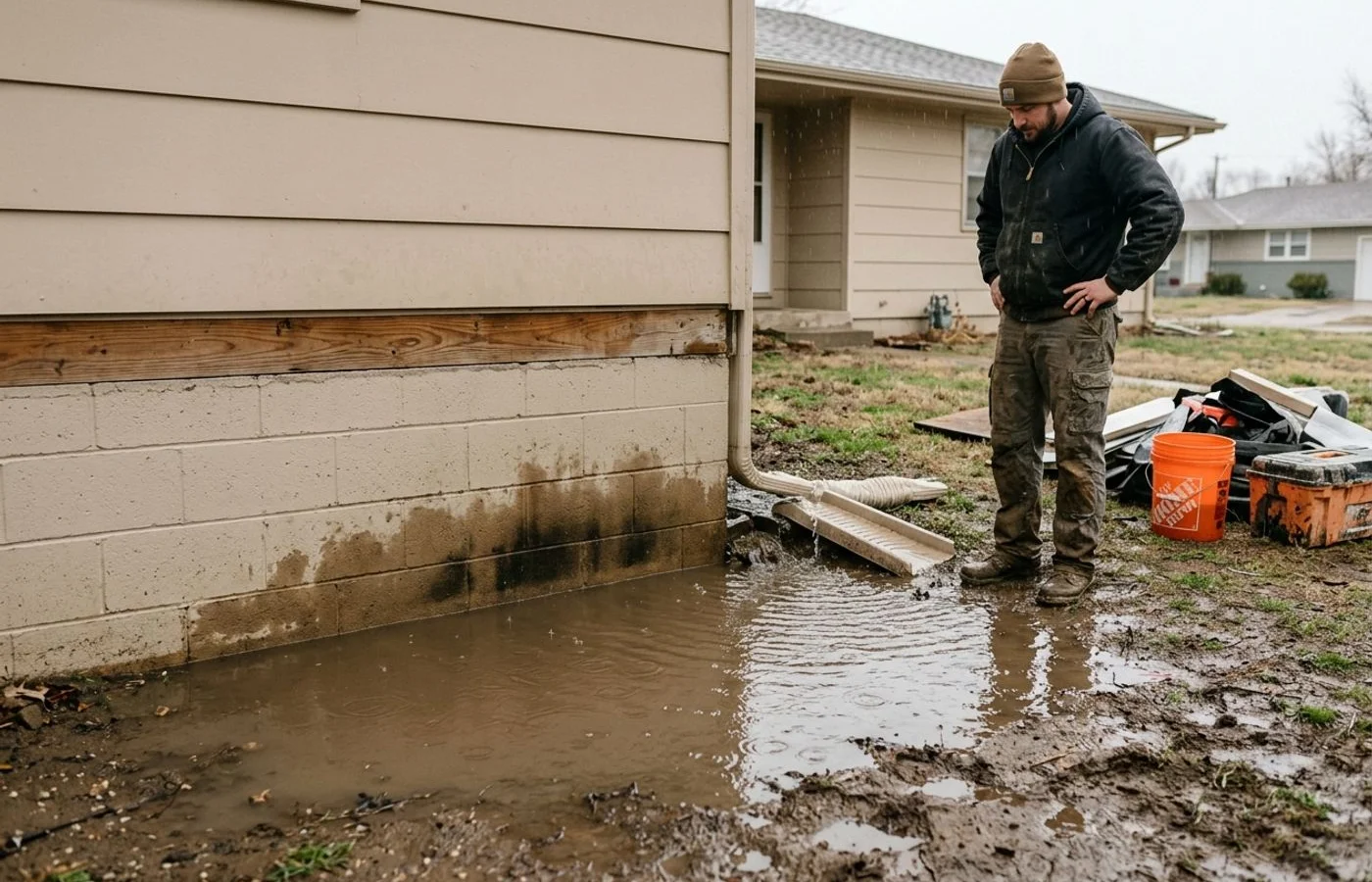
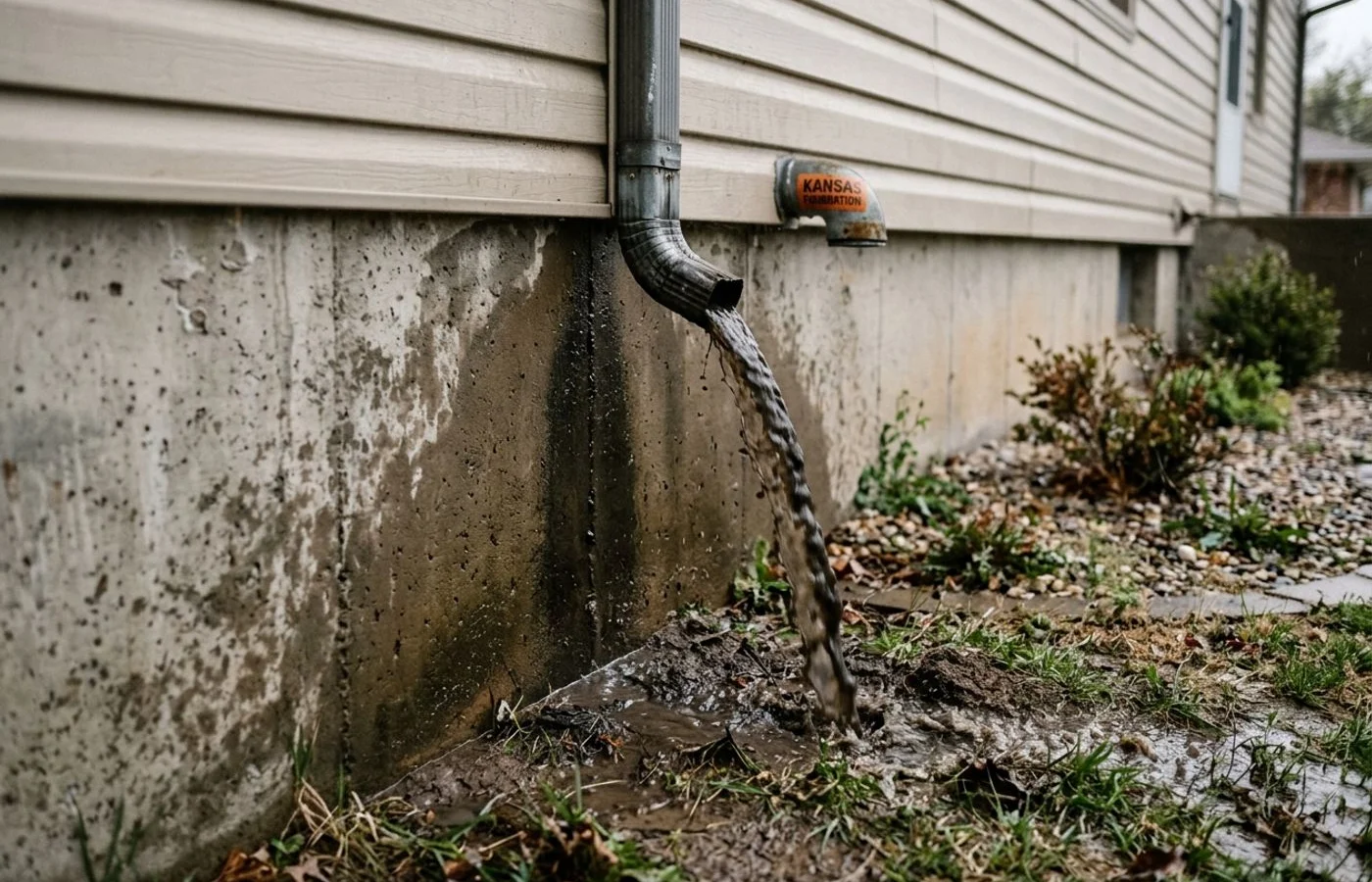
Faulty downspouts dump massive volumes of water directly against the house or overflow during heavy downpours. Water pooling near the corners of the house is a clear indicator of this defect. Our technicians know this is an affordable problem to fix, yet homeowners frequently overlook it.
Finally, even a hairline wall or floor crack lets moisture inside when hydrostatic pressure reaches a tipping point. A physical break in the concrete provides a direct path of least resistance. We address these structural gaps to prevent ongoing water damage.
How to tell which one you have
A few quick observations narrow down the problem before a professional even arrives. The timing and location of the water provide the most accurate diagnostic evidence. We rely on these exact same visual clues during our initial site visits.
- When does the water appear? Only after heavy rain points to hydrostatic issues, while continuous trickles suggest an identifiable internal source.
- Where does the water enter? The wall-floor joint is classic hydrostatic seepage, whereas a localized puddle usually means a specific crack or downspout.
- What is the exterior grade doing? Soil sloping toward the house is a red flag, while soil sloping away helps rule out surface grading.
- Where are the downspouts terminating? Gutter extensions must reach far away, otherwise water dumps right against the wall.
If two or three of these symptoms line up, the answer is often clear without invasive testing. Fixing the obvious surface defects first sometimes completely stops the seepage. We sort out the more complicated cases on-site using moisture meters and level checks.
Why hydrostatic pressure is the usual suspect in Kansas
Expansive montmorillonite clay under most local homes acts like a giant sponge that holds water. Wichita averages about 34 inches of annual rainfall, but heavy spring storms often dump several inches in a single day. We track local weather patterns to anticipate periods of extreme soil saturation.
When a big storm hits, the local water table rises rapidly. This water column pushes against the wall and slab with immense lateral force. Our measurements confirm that this intense pressure easily finds any weakness in the concrete.
The pattern usually unfolds like this:
- The lower level stays completely dry for weeks.
- A severe storm hits the area.
- Moisture shows up along the wall-floor joint or in a corner.
- Within a day or two, the concrete dries out completely.
- The next big storm repeats the exact same cycle.
If that sounds like your home, hydrostatic pressure is a strong candidate for the cause. A proper fix requires active water management beneath the slab. We install interior perimeter drainage and a sump pump to resolve this issue long term.
Choosing the best repair method depends heavily on your specific property layout. This interior vs exterior waterproofing guide explains the approaches thoroughly. Our team encourages reviewing that resource so you can decide which option fits best.
Why grading and downspouts matter more than people think
The cheapest single fix on most wet basements is not actually waterproofing. Surface water management stops thousands of gallons from ever reaching the foundation walls. We find that fixing where the water starts on the exterior is a much smarter first step.
- Regrade the affected zone: Ensure the soil drops at least 6 inches over the first 10 feet away from the house.
- Extend the downspouts: Push gutter discharge 6 to 10 feet away, or connect them to a buried discharge pipe.
- Check gutter capacity: Verify the roof drainage system is not overflowing during intense spring downpours.
On some homes, these simple adjustments stop the seepage entirely. Taking off the easy variables makes the final diagnosis much cleaner. We see this reduce the moisture load enough on other houses that waterproofing then works reliably.
Cracks and their role
A hairline vertical crack in a poured wall may look strictly cosmetic at first glance. Physical breaks in the concrete act as a direct pathway for groundwater to enter your home. We know that if hydrostatic pressure builds behind it, water easily follows that crack inside.
Fixing the wall crack alone often fails because the pent-up pressure simply finds the next weakness. The proper approach focuses on managing the groundwater first. Our standard protocol is to relieve the pressure with drainage, then seal the crack if needed.
A thorough inspection determines the true severity of the damage. Understanding the difference between a minor settlement crack and a major structural failure is critical. We share exactly how to evaluate these issues in our foundation crack repair guide.
What to do first
Taking immediate action during a storm provides the best diagnostic evidence. Getting a clear picture of the symptoms helps any professional isolate the defect faster. Our team recommends following a specific checklist before calling a contractor.
- Photograph the entry point: Capture images with a date stamp, especially during and right after a storm.
- Check the exterior grade: Look for reverse slopes and pooling water near the walls.
- Trace every downspout: Follow the pipe to see exactly where it terminates in the yard.
- Note the seepage pattern: Record whether the moisture repeats after every heavy rain event.
Scheduling an inspection early prevents minor dampness from becoming a major structural repair. A proper evaluation guarantees you fix the actual source of the moisture. We offer a free on-site diagnosis if the pattern is not obvious from these initial checks.
It is easy to request an evaluation through our basement waterproofing service or by calling (316) 613-4575.
Professional guidance ensures you make the right choice for your home. Our promise is to tell you exactly what is causing the water before quoting any repairs.