Crawl Space Encapsulation & Vapor Barriers
Humid, moldy crawl space? Learn how vapor barriers and encapsulation stop moisture, wood rot, and mold in Kansas crawl spaces.
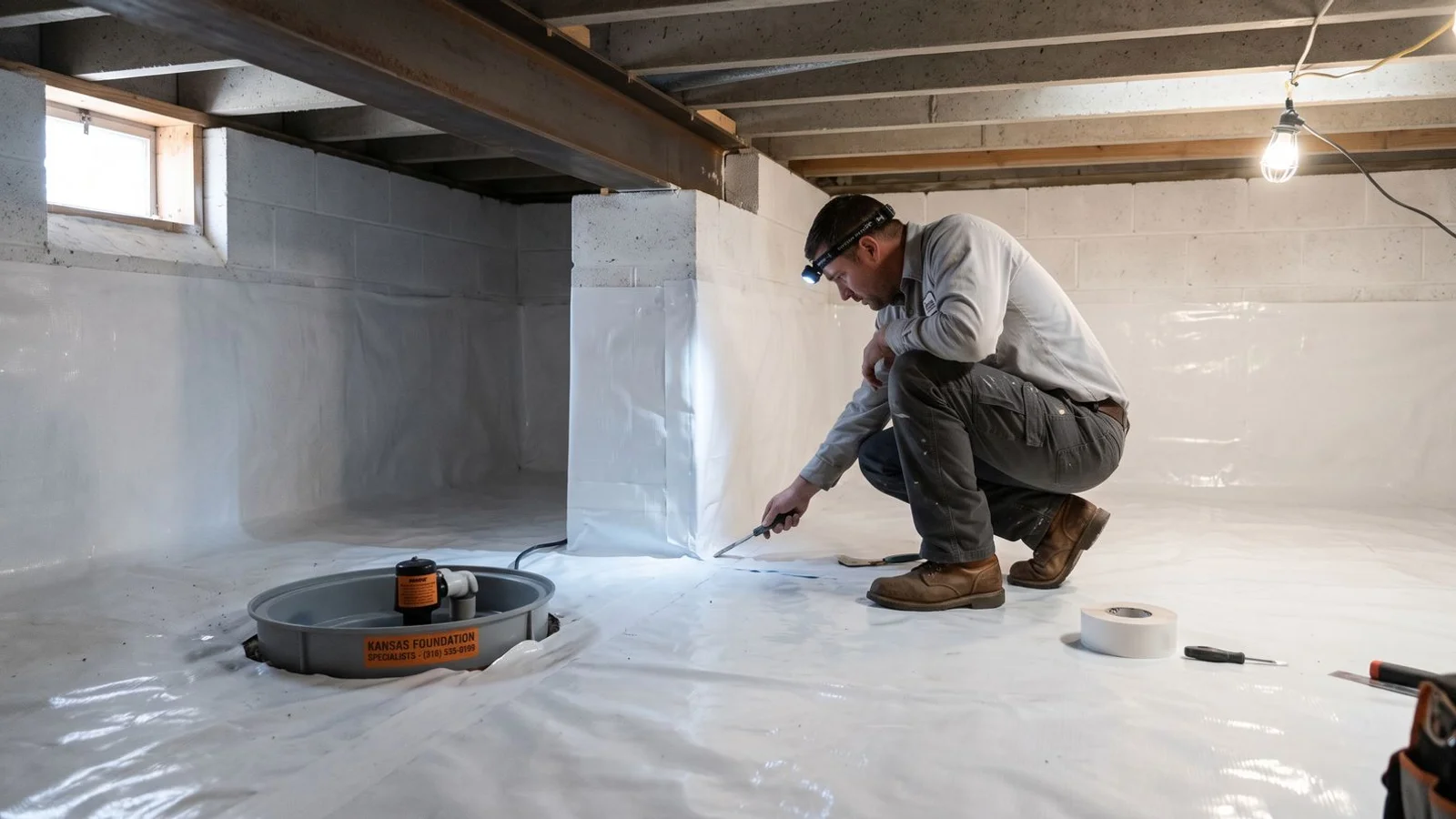
We know that crawl spaces usually get ignored right up until they cause an expensive problem.
Your home likely has hidden moisture gathering out of sight.
Our company, Wichita Foundation Solutions, was founded with a simple mission: to provide exceptional foundation repair and waterproofing services that customers can rely on.
You have probably seen how south-central Kansas weather wreaks havoc on older structures.
Excessive crawl space moisture down below eventually becomes mold, wood rot, and musty air upstairs.
Proper crawl space encapsulation Wichita KS homes rely on is how you shut all of that down at once.
Let’s look at the data, what it actually tells us about local building science, and how to stop the moisture cycle for good.
What crawl space encapsulation Wichita KS actually means
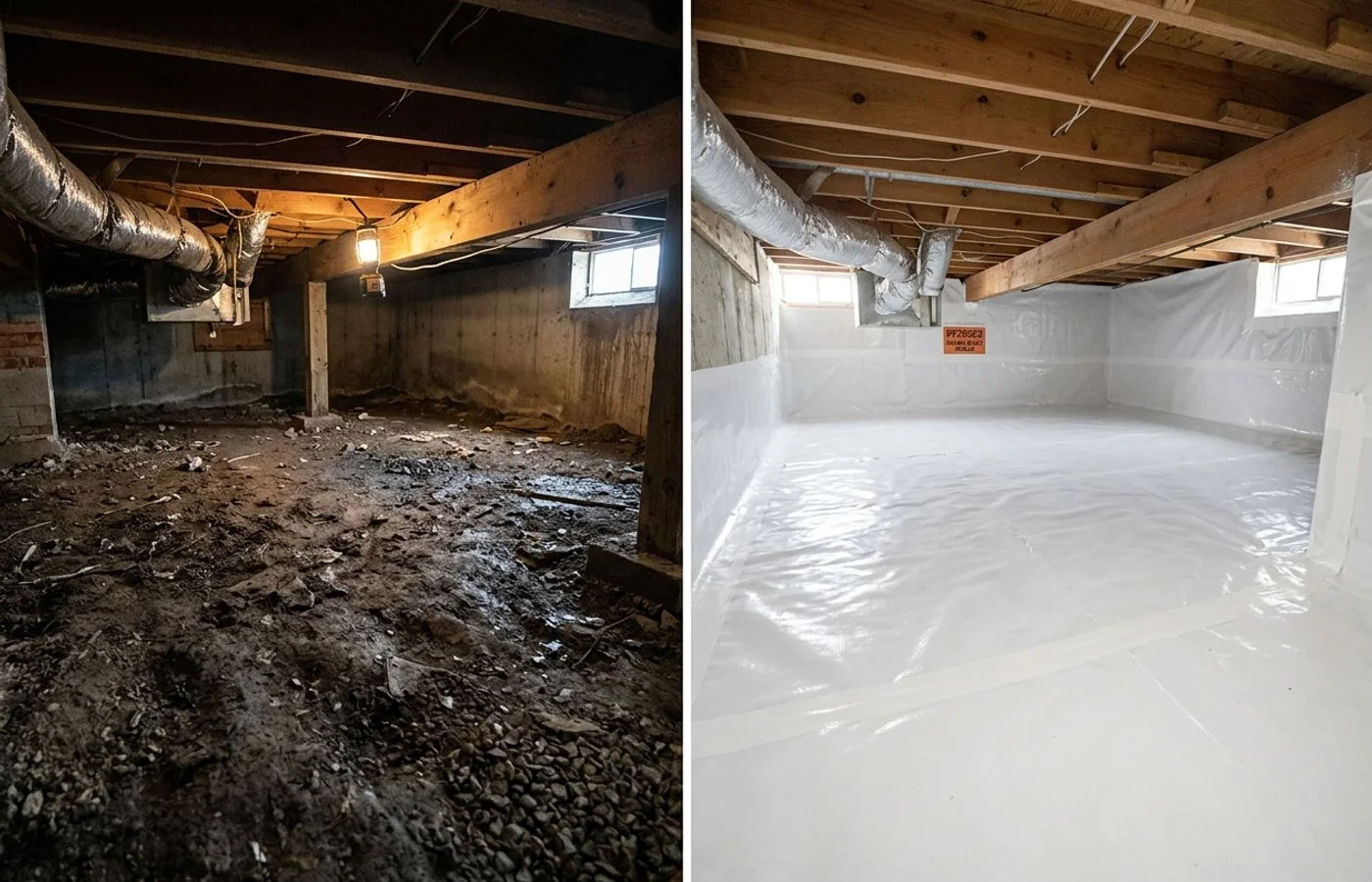
Crawl space encapsulation means sealing the dirt floor with a heavy vapor barrier crawl space system that runs up the foundation walls.
We follow the unvented crawl space guidelines set by Section R408.3 of the International Residential Code to ensure a proper installation.
The thick barrier keeps ground moisture and outside humidity out of the area entirely.
Our crews pair this protective liner with a dedicated dehumidifier to finish the job.
The final encapsulated space stays at a low, controlled relative humidity year-round.
| Feature | Vented Crawl Space | Encapsulated Space |
|---|---|---|
| Moisture Source | Open to humid outdoor air | Sealed from outside elements |
| Ground Contact | Exposed dirt floor | Covered by 20-mil barrier |
| Relative Humidity | Fluctuates heavily (Often 70%+) | Controlled (Below 55%) |
The typical build includes several critical steps:
- Clean out the existing crawl space debris
- Install a 20-mil reinforced vapor barrier on the floor
- Run the barrier up the walls to just below the sill plate
- Seal seams and edges with permanent mastic
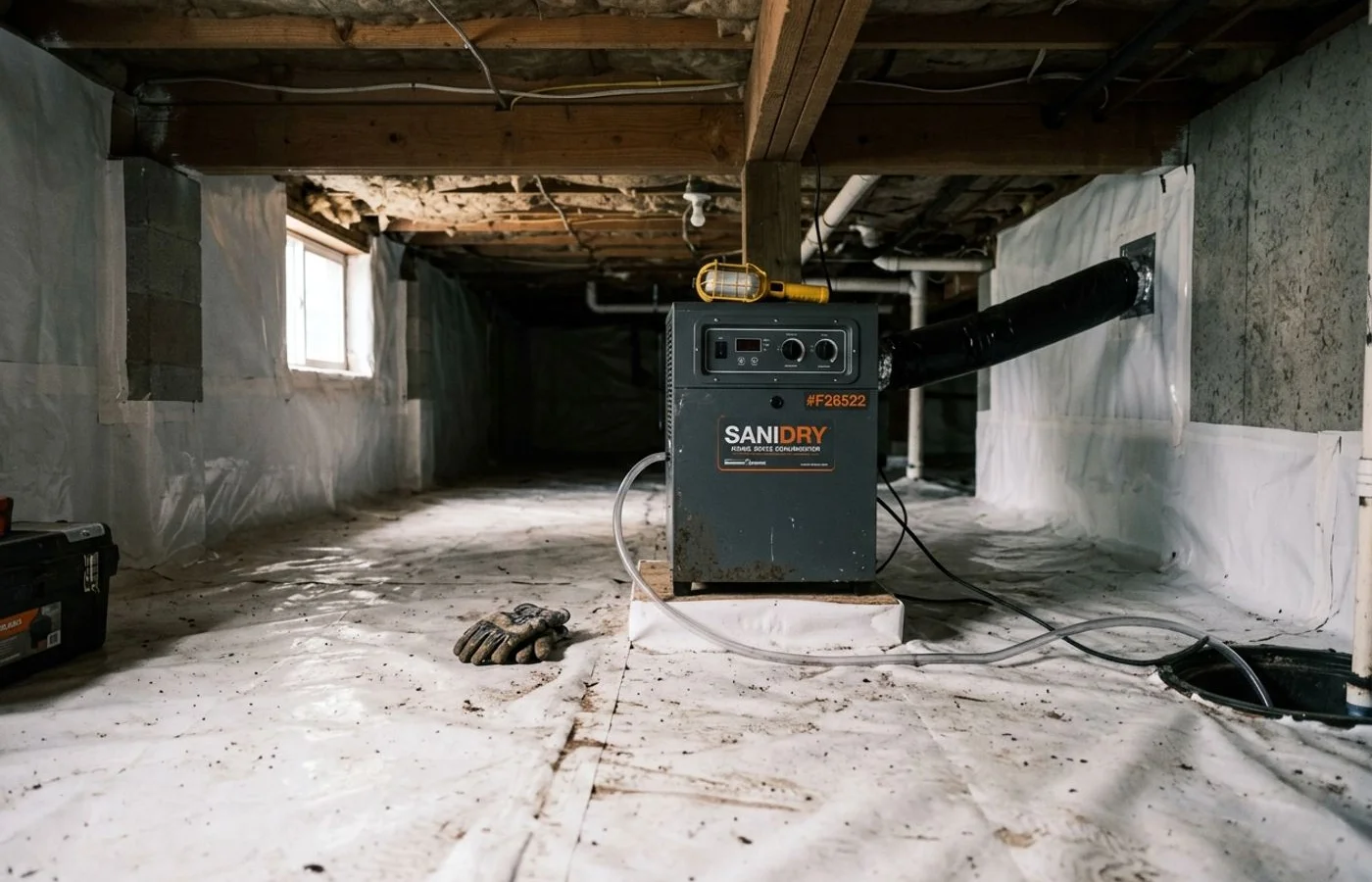
- Add a dedicated commercial crawl space dehumidifier
- Seal any vents and openings to outside air
The result is a clean, sealed, controlled space that no longer contributes moisture to the house.
Why Kansas crawl spaces need this
Soil in south-central Kansas holds a massive amount of water.
We constantly deal with Wichita’s Hydrologic Group D clay soil, which swells when wet and traps moisture for weeks after a heavy spring rain.
That trapped moisture constantly evaporates upward into any crawl space that is not sealed.
Even without visible standing water, the ground gives off enough humidity to keep a dirt floor damp all summer.
Our regional climate adds another layer of stress, as summer dew points regularly hit 65 to 72 degrees Fahrenheit.
The consequences show up over months and years:
- Wood rot in floor joists, sill plates, and subfloor
- Mold and mildew on structural wood and fiberglass insulation
- Rusted metal on straps, plumbing, and HVAC ductwork
- Musty smell that migrates upstairs through the stack effect
- Failed insulation that sags and traps even more moisture
None of those problems are dramatic on day one.
All of them get worse quietly over time.
Why “just ventilate” does not work here
Old code told builders to vent crawl spaces to the outside.
The original idea was that outdoor wind would carry stagnant moisture away.
We know that strategy only succeeds in dry, arid climates.
It completely fails in south-central Kansas, where outdoor relative humidity frequently reaches 75 to 85 percent during summer nights.
Modern building science proves that venting a crawl space in a humid climate simply pulls hot, sticky air inside, causing heavy condensation to drip directly off the floor joists.
Our local summer air is actually much more humid than the cool environment under your house.
Venting pulls that humid air inside, which completely defeats the purpose of the vents.
Seal the space, control the humidity, and stop the damaging moisture cycle.
The 20-mil barrier matters
Not all vapor barriers are equal.
Thin 6-mil plastic sheeting from a hardware store will puncture in a single season and let moisture leak through the unsealed seams.
We strictly install a 20-mil reinforced vapor barrier made from 100 percent virgin polyethylene resin.
Top-tier brands like SilverBack or Dura Skrim are heavy, durable, and fully sealable.
Our installation teams use this thick material because it easily handles rough dirt and maintenance foot traffic for decades without tearing.
Nobody wants to redo a major foundation project in three years.
Where dehumidifiers fit
The ground barrier stops moisture from the soil, but it does not stop humidity from outside air leaks.
We always install a dedicated crawl space unit, such as a commercial-grade AprilAire or Santa Fe dehumidifier, to manage the remaining air.
Wet building materials need a mechanical way to dry out safely.
Our specialists set these systems to keep the relative humidity strictly below 55 percent.
That specific percentage is the critical threshold where mold spores cannot grow or survive.
Some crawl spaces require heavy water-removal capacity, while some layouts only need modest humidity control.
We size the equipment specifically to your home’s square footage and ambient conditions.
Encapsulation vs waterproofing
Encapsulation solves moisture and humidity problems.
It does not solve active water intrusion from a rising water table.
If water actively floods the area during heavy rain, that is a completely separate problem.
We look at 2026 regional foundation data showing that roughly 60 percent of moisture issues stem from poor exterior grading and yard drainage.
You need drainage and waterproofing first to address the bulk water.
Our layered approach ensures the encapsulation keeps everything perfectly dry once the active intrusion is fixed.
See our keeping a Kansas basement dry guide for exactly how these different systems layer together.
Signs your crawl space needs attention
Musty odors upstairs are usually your first warning sign, especially in humid weather.
We look for several specific red flags during a standard evaluation.
- Sagging or dark discolored fiberglass insulation
- Visible mold growth on joists or wood surfaces
- Squishy, soft floors directly above the crawl space
- High indoor humidity readings that simply will not drop
- Rusted metal straps, ductwork, or plumbing fixtures
Any of these symptoms indicate a structural vulnerability.
If any of these show up, schedule a professional check to catch the damage early.
Free crawl space inspection
We inspect crawl spaces across the Wichita metro area and tell you honestly whether full encapsulation is warranted.
A professional review removes the guesswork from foundation care.
If the crawl space encapsulation Wichita KS project makes sense, we provide a detailed scope of work.
If a full seal is not necessary, the technician will tell you what would actually help.
Book a free evaluation through our basement waterproofing service or call (316) 613-4575 to get started.