Why Foundations Crack in Kansas Clay Soil
South-central Kansas clay swells and shrinks with the seasons, cracking brick and drywall. Learn why Wichita foundations move and how to stop it.
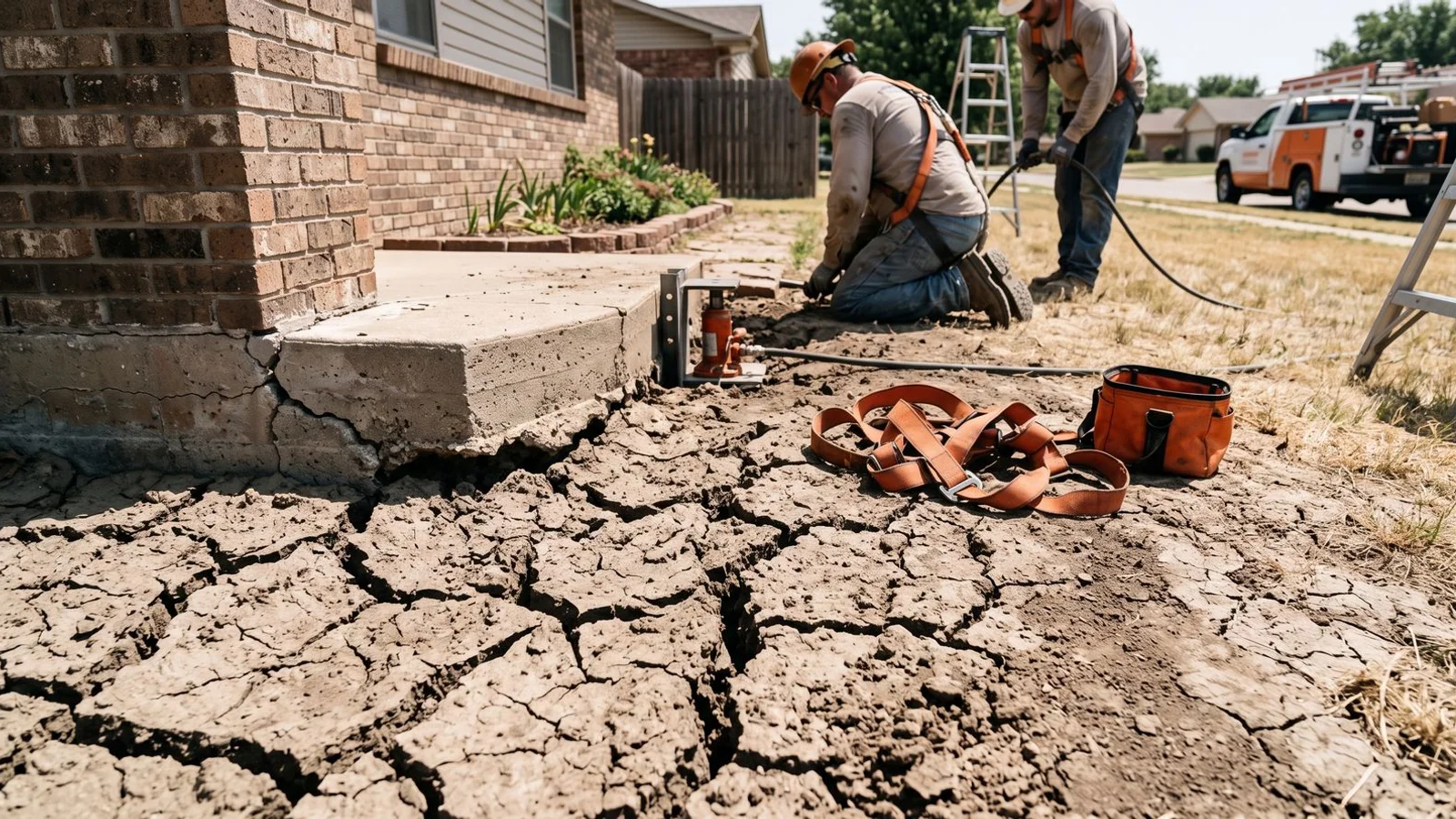
If you have ever typed “why is my brick cracking kansas” into a search bar, you already know how frustrating structural issues can be.
We see this exact frustration constantly in our line of work across south-central Kansas. The true culprit is rarely the house itself, as the ground beneath your feet is driving these structural shifts.
Our team at Wichita Foundation Solutions knows the primary cause is expansive clay soil. A 2026 Groundworks industry report shows Kansas ranks first nationwide for foundation repair searches, directly correlating with our region’s soil chemistry.
We will look at the data, explore what it is actually telling us, and outline practical ways to respond.
The Arkansas River basin sits on expansive clay
The Arkansas River basin is built on Harney Silt Loam and related expansive clays. These unique soils physically swell with water and shrink when dry. Our technicians routinely measure massive pressure changes around buried concrete.
This distinct chemistry explains why a kansas clay soil foundation constantly moves. Harney Silt Loam is the official state soil and covers roughly 4 million acres. We find that it absorbs large amounts of water directly into its molecular structure.
Sand and standard loam drain easily, but this specific clay traps moisture directly against your basement walls. Our inspections reveal that this expansive clay can change volume by ten percent or more between saturated and drought conditions. That dramatic shift easily lifts heavy concrete slabs, and the table below illustrates the stark difference.
| Soil Type | Expansion Potential | Foundation Risk |
|---|---|---|
| Harney Silt Loam (Clay) | Up to 10% volume change | High, severe structural lifting |
| Sandy Loam | Minimal volume change | Low, fast drainage |
The shrink-swell cycle
We track local weather patterns closely to anticipate structural issues. Kansas experiences extreme weather swings that trigger a continuous shrink-swell cycle. This seasonal expansion and contraction systematically stresses your footings.
Our crews stay busiest during severe drought years when the ground violently pulls away. State climate data from late 2025 highlights how rapidly these extremes shift. An abrupt change from a wet spring to a scorching summer is the worst-case scenario.
We see homes tolerate modest movement during mild weather years. Every transition from wet to dry creates intense friction.
- Wet spring and early summer: expansive clay saturates, swells, and pushes on foundation walls
- Hot dry mid-to-late summer: clay dries out, shrinks, and pulls away from the footing
- Fall and winter: freezing and thawing add another cycle of expansion
A wet spring followed by a hard dry summer creates dramatic swings that tear houses apart. Our foundation specialists repair the resulting damage every single week. This severe weather swing guarantees new expansive soil cracks.
How that soil movement cracks a home
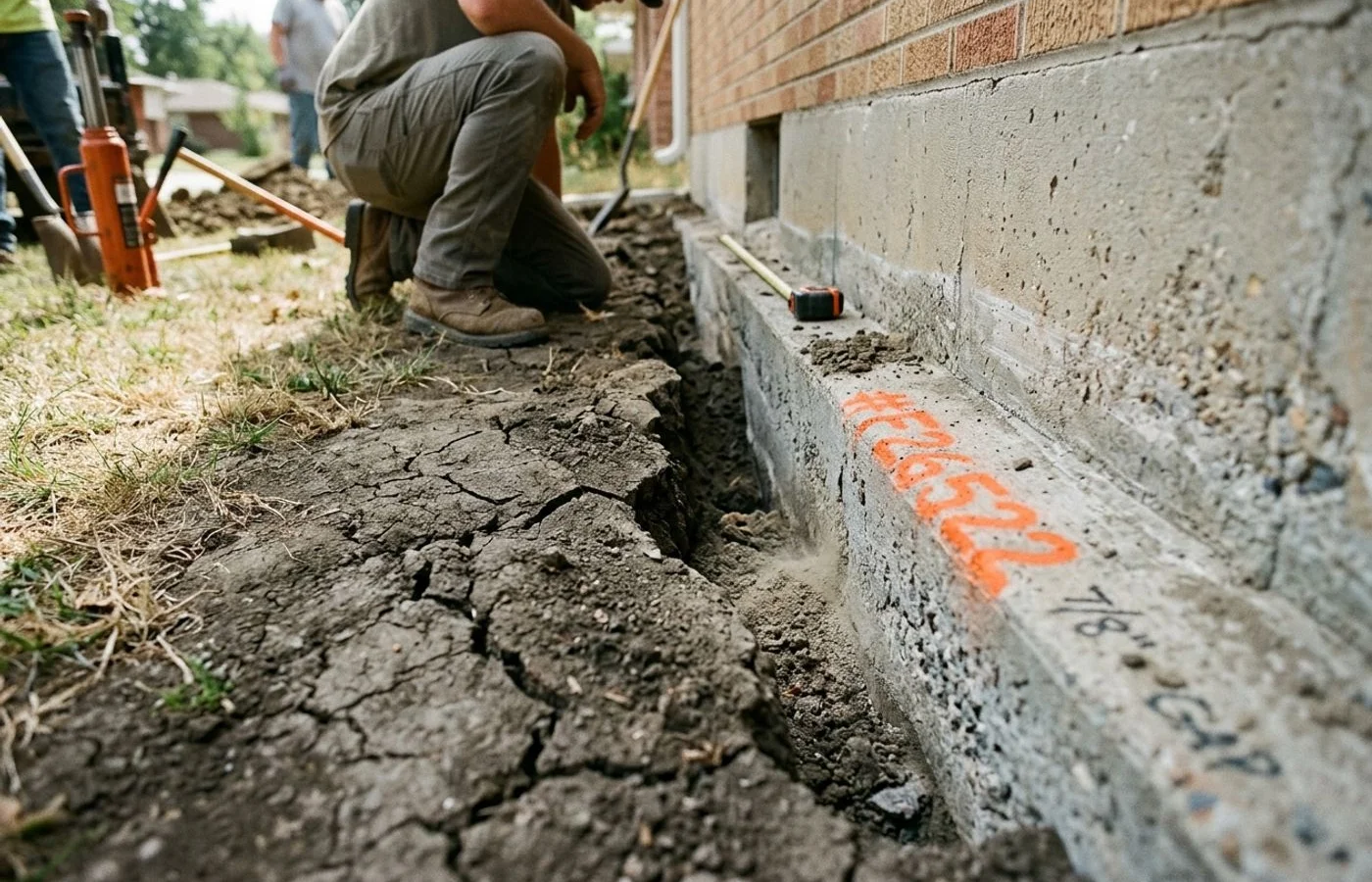
Soil movement cracks a home through two main failure modes. We classify these movements based on how the clay interacts with the concrete. These issues present as horizontal wall fractures or stair-step brick cracks.
The underlying cause is always soil movement. Our foundation experts often measure thousands of pounds of pressure pressing against a single wall section. Understanding these specific mechanisms helps you spot danger early.
Swelling clay pushing on basement walls
Saturated clay pushes laterally on the outside of basement walls. We handle this classic bowing wall pattern daily. Hydrostatic pressure builds up until the rigid structure simply yields.
You can read all about it in our bowing basement wall guide. Our technicians see the wall bow inward, crack horizontally, or shift completely off the footing.
Why Is My Brick Cracking Kansas? Shrinking clay pulling away
Dry clay contracts and drops below the footing, leaving dangerous empty voids. The footing settles into the void, tilting the wall and cracking the brick veneer. We hear this exact question every August when the heat peaks.
The heavy framing above racks and twists out of alignment. Cracks in drywall, brick, and concrete slabs are the visible result.
Why new-construction homes are affected too
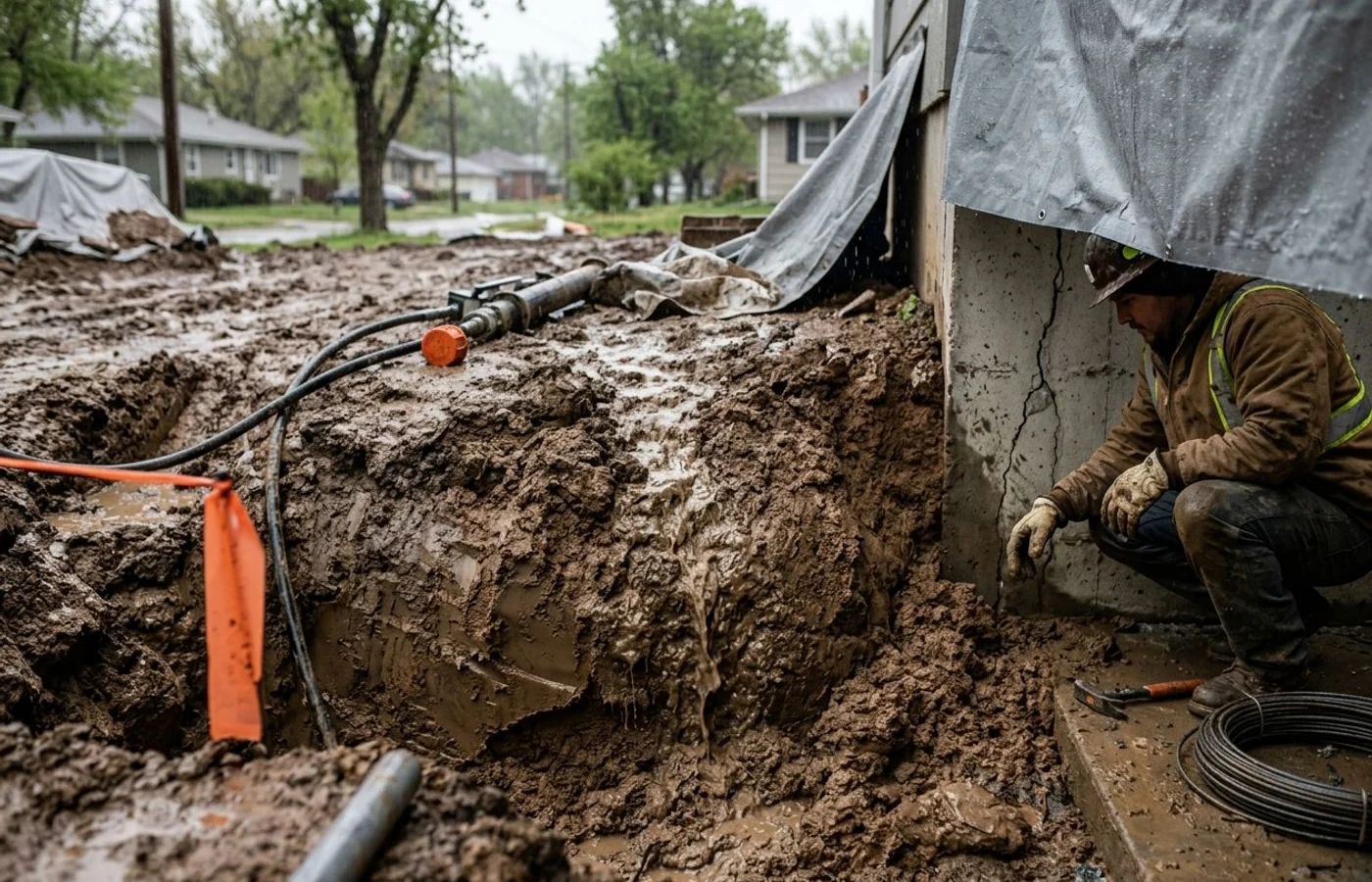
We regularly receive calls from frustrated owners of brand-new properties. Homeowners in Maize, Bel Aire, and Andover often assume a new home is immune to settlement, but this is a dangerous misconception.
Our team advises clients that settlement patterns commonly show up two or three years into a new home. New-development lots sit on freshly graded soil that has not fully consolidated. The disturbed earth shifts significantly as it compacts under the weight of a new house.
”According to regional construction data, most initial residential settlement in south-central Kansas occurs within the first 12 to 24 months as the new foundation compresses the graded clay.”
We emphasize that this movement is a normal timeline for expansive clay. Freshly excavated lots lack the natural compaction of untouched ground. The heavy structure compresses this loose earth downward over a 24-month period.
Our inspectors confirm that it does not mean the local builder failed. The soil is simply reacting to the new load and seasonal moisture changes. This natural consolidation requires time and patience.
Why local soil expertise matters
We adapt every single fix to the specific conditions found on your property. Local soil expertise ensures your repair matches the exact shrink-swell behavior of your lot. A misdiagnosed repair will fail when the next major weather event hits.
Our specialists match the specific repair to what the earth is actually doing. National franchises often try a one-size-fits-all approach for entirely different soil profiles. Treating every Wichita call exactly the same is a recipe for failure.
| Soil Behavior | Targeted Repair Solution | Primary Goal |
|---|---|---|
| Swelling clay pushing inward | Carbon fiber straps or wall anchors | Counteract lateral pressure |
| Shrinking clay dropping down | Steel push piers or helical piers | Reach stable load-bearing strata |
| Surface water feeding cycle | Yard drainage correction | Stop localized moisture pooling |
We read the unique soil signature under your home before driving a single piece of steel. A carbon fiber strap system works wonders for bowing walls, but does nothing for vertical settlement. Driving steel piers to bedrock provides permanent vertical support.
We recommend steel push piers or helical piers driven to stable strata when shrinking clay drops a footing. Correcting the surface water flow is always the vital first step for long-term stability. Precision matters when dealing with heavy structural loads.
Our custom plans ensure drainage correction accompanies these structural fixes. An integrated approach provides the most permanent protection. Rushing a repair without analyzing the soil always backfires.
What you can do about it
We emphasize proactive water management to all of our local clients. You cannot stop expansive clay from moving entirely. You can significantly reduce how much it moves under your foundation by managing perimeter moisture.
Our technicians recommend deep watering during severe droughts to maintain soil volume. Simple preventative steps can save you thousands of dollars in major structural work. A single large tree near your foundation can absorb 100 gallons of water daily, accelerating soil shrinkage.
We provide these exact maintenance tips to every homeowner after a project. Consistent moisture prevents the violent contracting that causes settlement voids. Following a few basic maintenance steps protects your concrete.
- Extend downspouts away from the foundation
- Grade your yard to move water away from the house
- Keep perimeter moisture steady, especially during severe drought
- Monitor large trees near the house to ensure roots are not draining soil moisture
- Fix pooling drainage before it becomes a foundation problem, ideally through our yard drainage service
Our crews witness how early intervention saves homes. Where movement has already happened, foundation repair restores stable support. Immediate action stops the cycle from doing more severe damage.
Book a free inspection
We will provide a free, honest, on-site assessment of your property. Stop wondering “why is my brick cracking kansas” and take action to protect your home. Ignoring the early warning signs only leads to more expensive repairs.
Our experts will tell you exactly what to do about it. The inspection determines whether the movement is simply cosmetic or a true structural failure. Catching the problem early is the best way to secure your investment.
We guarantee a straightforward, pressure-free evaluation. Contact the office today to book your evaluation. The right repair plan restores your peace of mind.