Do I Need a Battery Backup Sump Pump?
Kansas storms knock out power exactly when your sump pump is needed most. Learn how battery backups work and whether your home needs one.
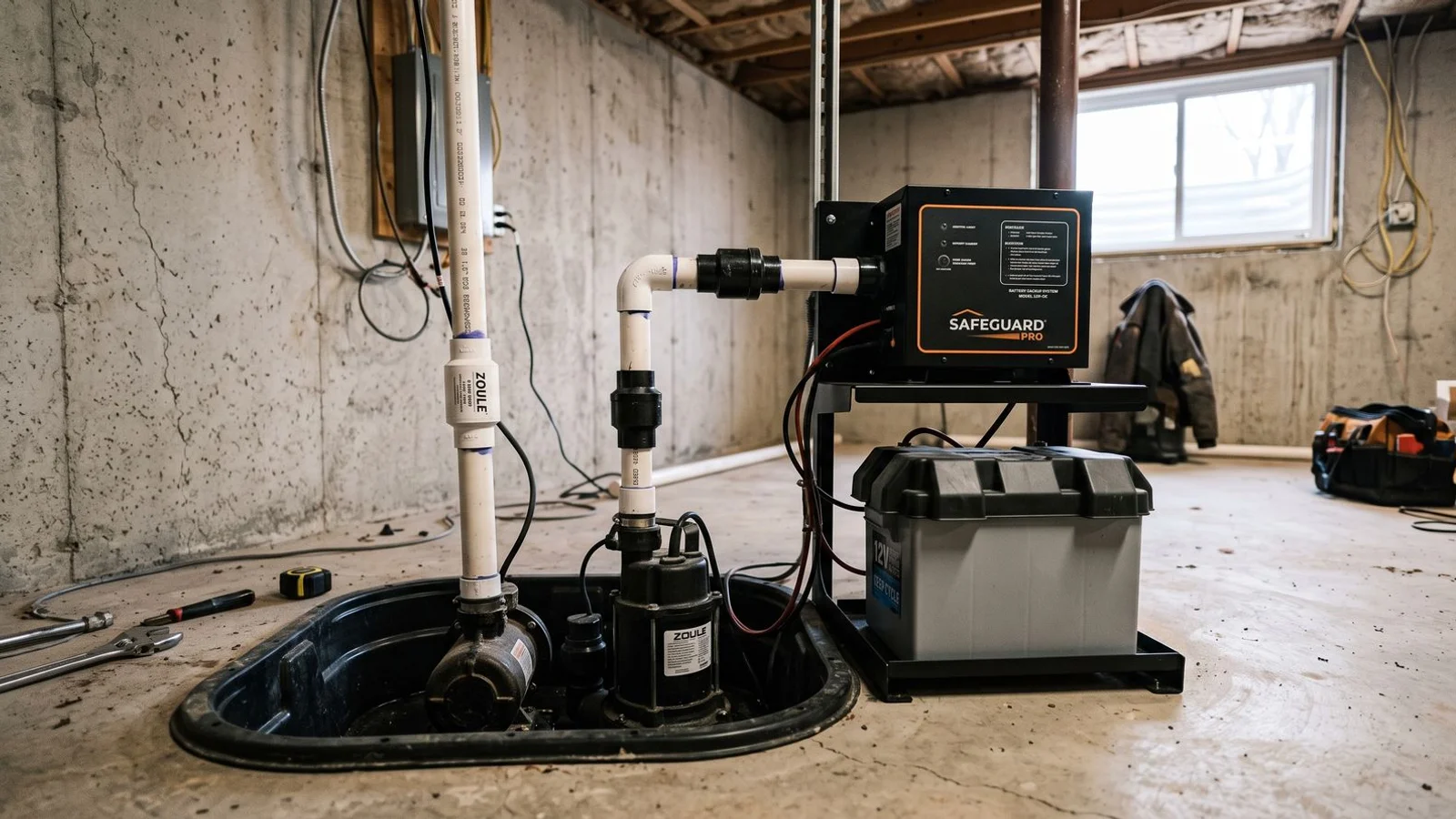
We see it happen every spring across south-central Kansas. A severe thunderstorm rolls through, your neighborhood loses electricity, and suddenly your basement is filling with groundwater. That vulnerability is exactly why a battery backup sump pump is a critical line of defense for local homes.
Let’s look at the hard data from recent weather events to understand the true risk. Then, we will break down exactly how these emergency systems operate and what they cost. You can use this guide to figure out if your property actually requires that extra layer of protection.
What a battery backup does
A battery backup is a secondary pumping system powered by a dedicated 12-volt DC battery. It sits directly in the same basin as your primary AC-powered pump or in an adjacent pit. When the local grid drops or the main unit suffers a mechanical failure, a dedicated float switch detects the rising water.
Our team at Wichita Foundation Solutions has spent years providing exceptional foundation repair and waterproofing services across the region. The installation specialists configure these emergency units to convert 12-volt stored energy into standard 120-volt AC power via an onboard inverter. This conversion allows the backup system to push water out of the house just as effectively as your main pump.
Two standard configurations exist for residential properties:
- Battery-powered secondary pump: A separate, independent unit sits slightly higher in the same basin to catch overflow.
- Battery-powered primary: The main pump runs off a continuous inverter system wired directly into the house as a failsafe.
High-capacity backups rated between 100Ah and 200Ah provide the most reliable performance for multi-pump setups. Either way, the water continues flowing safely outside when the street goes dark.
The specific Kansas problem
Kansas storms routinely generate straight-line winds that rip down utility poles and leave entire zip codes in the dark. A typical scenario plays out during the early morning hours.
- Heavy thunderstorm hits at 2 a.m.
- Local power grid drops as the storm intensifies.
- Standard sump pump loses AC power instantly.
- Water accumulates unchecked inside the basin.
- Basement floods while everyone sleeps upstairs.
- Power returns hours later, long after the damage is done.
We tracked this exact failure mode during the massive June 2026 storms across the state. Evergy reported that 118,000 customers lost power overnight. Wind speeds hit 115 miles per hour in places like Salina, snapping hundreds of poles and causing multi-day outages.
A power outage sump pump failure is the exact scenario these emergency units are engineered to prevent. It stops a bad storm from turning into a massive home repair project.

Who benefits most from a backup
The decision to upgrade your basement protection comes down to repair costs versus installation costs. Recent 2026 industry data shows the average cost to clean up a flooded basement sits between $2,000 and $7,000. That figure climbs past $10,000 rapidly if finished drywall, carpet, or category 2 gray water contamination is involved.
We recommend battery backup sump pump installations without hesitation for homes with:
- A finished basement where drywall and flooring damage would be incredibly expensive to replace.
- A basement below the water table where groundwater enters the basin even during dry weather.
- A history of active seepage visible at the wall-floor joint.
- A primary pump that runs frequently just to keep up with normal soil saturation.
- A location in a storm-prone area where extended Evergy outages are a known hazard.
Backups remain optional but highly recommended for properties with:
- Unfinished dry basements with only occasional light seepage.
- Well-drained foundations with rare pump activation.
- Elevated lots where natural yard grading makes flood risk inherently lower.
Any homeowner matching the highest risk categories should prioritize this upgrade. You will save thousands of dollars and avoid immense frustration the first time the grid drops.
How long a backup runs
A standard 100Ah deep-cycle marine battery will typically run a 1/3 horsepower sump pump backup unit for five to seven hours of continuous pumping. That same battery can stretch its protection for one to three full days if the pump is only cycling intermittently.
Our technicians always calculate runtime based on three specific factors.
- Battery capacity: Larger amp-hour ratings equal longer runtime. A premium 75Ah system like the Wayne WSS30V can move up to 10,000 gallons on a single charge.
- Pump duty cycle: Heavy water inflow requires more frequent cycles, draining the power supply much faster.
- Ambient temperature: Extreme cold in an uninsulated space slows the internal chemical reaction and reduces battery output.
Most residential systems installed in Wichita are sized to cover a standard Evergy outage window plus a wide safety margin. Extremely long, multi-day blackouts may eventually exhaust a basic battery. Homeowners with severe water tables should consider running a dual-battery configuration to double their pumping window.
Maintenance requirements
A dead battery is actually worse than having no backup at all. You might go to sleep assuming your basement is protected, only to wake up to standing water because the emergency unit failed to trigger.
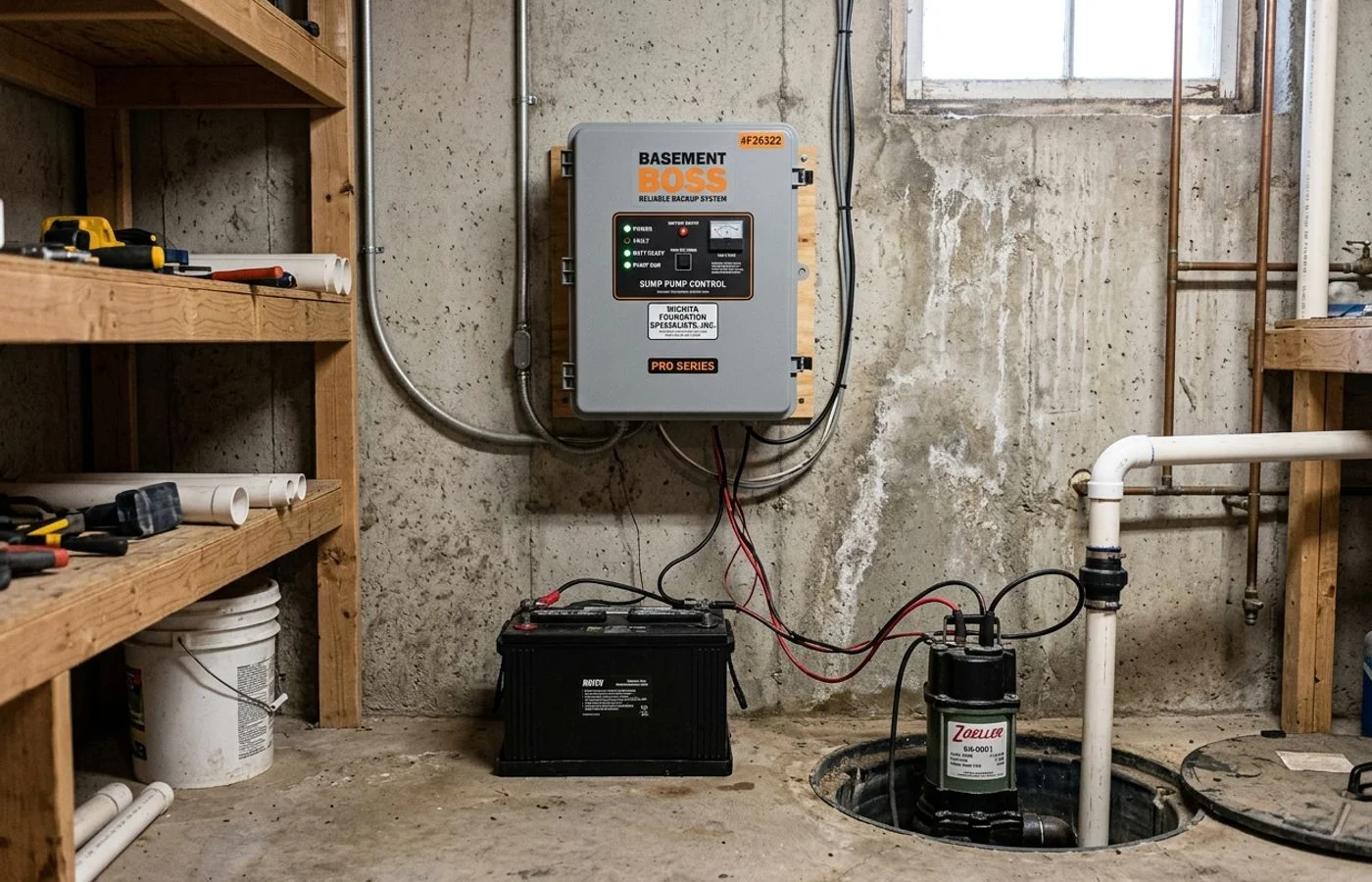
We advise homeowners to perform simple seasonal checks to ensure the system is ready for severe weather. Experienced plumbers frequently point out that simply keeping the electrical terminals clean prevents most failure-to-start issues.
Routine System Checks
- Test the system twice a year by running a garden hose into the basin to ensure the emergency float switch activates the pump.
- Inspect the battery type. Traditional lead-acid batteries require you to add distilled water occasionally, while AGM batteries are practically maintenance-free.
- Clean the terminals with a wire brush to remove any acid corrosion.
- Confirm the control panel displays a healthy, fully charged status light on a weekly basis.
Skipping these basic steps defeats the entire purpose of the installation. A well-maintained AGM battery will reliably serve your home for three to five years before requiring replacement. If your primary pump is showing its age, our guide on the signs your sump pump is failing covers the warning signs to watch for.
Cost vs flood damage
Understanding the financial math makes the decision to install a backup much clearer. National 2026 pricing data shows a professional battery backup installation averages between $600 and $1,200.
We construct our pricing to reflect the specific hardware required for your existing pit. Compare that upfront investment to the harsh reality of water damage.
| Expense Category | Estimated Cost (2026 Data) |
|---|---|
| Battery Backup Installation | $600 - $1,200 |
| Basic Pump-Out (Clean Water) | $800 - $1,800 |
| Full Dry-Out & Sanitizing | $1,800 - $3,200 |
| Finished Basement Rebuild | $4,000 - $15,000+ |
This equipment pays for itself entirely the very first time a storm knocks out your power. You gain total peace of mind knowing the lower level of your home remains dry.
Free assessment
Every foundation behaves differently during a heavy rainstorm. If you are not completely sure whether your basement risk warrants a battery backup sump pump, get a free on-site evaluation from our team.
We will assess your primary pump hardware, check the historical seepage pattern, and calculate the true flood risk for your specific neighborhood. The technicians then make a targeted recommendation based on the actual situation inside your basin. Book your evaluation through our sump pump service page or call (316) 613-4575 today.