Case Study: Stabilizing a Bowing Basement Wall in Derby, KS
How we diagnosed and fixed a bowing basement wall on an established Derby home using carbon fiber straps, and kept the homeowner informed at every step.
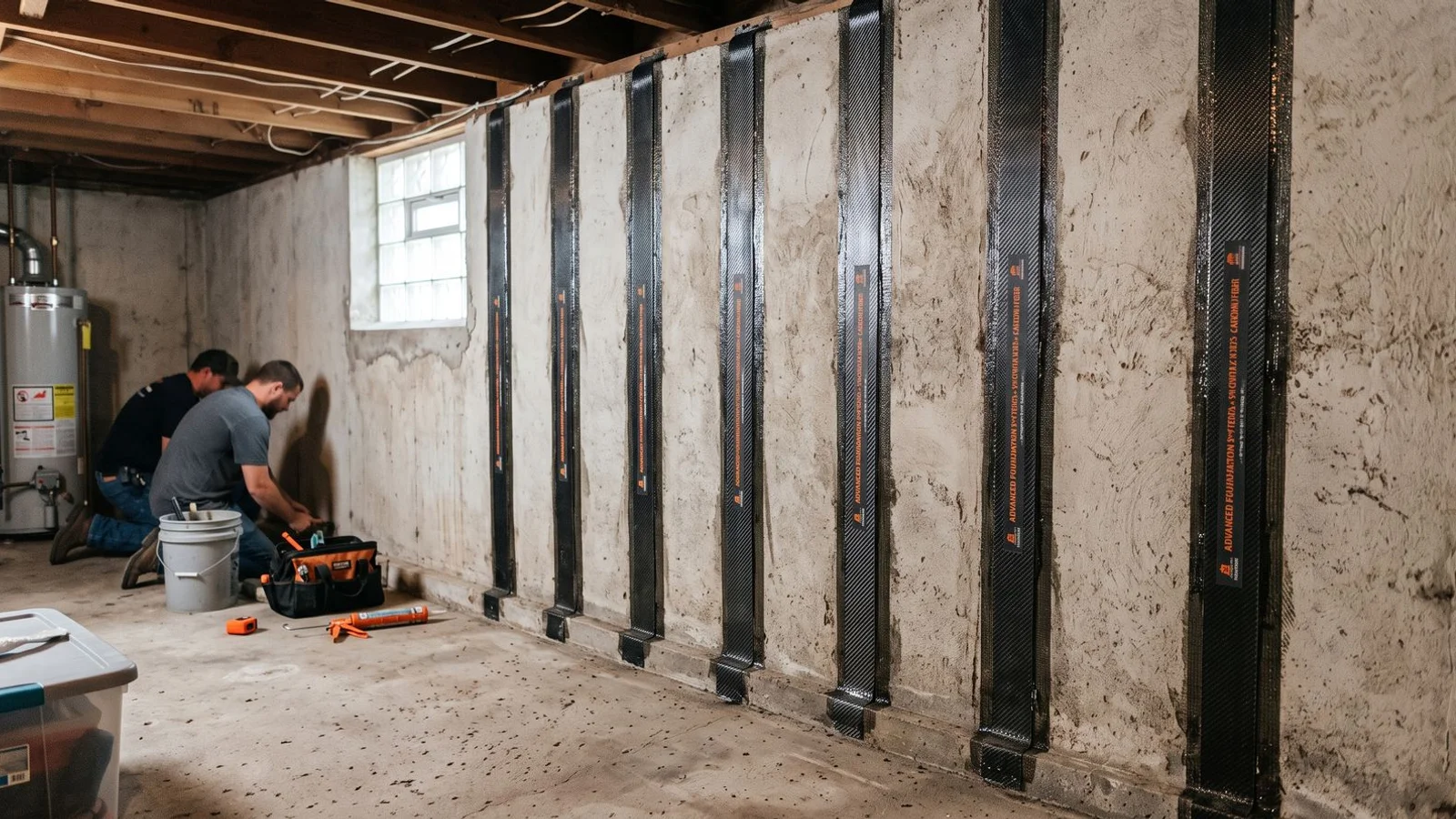
Every foundation repair in Wichita starts the same way: a homeowner sees something they cannot explain and calls looking for a straight answer. This one started with a horizontal crack running across the north basement wall of a family home in Derby, Kansas, and a homeowner who braced herself for a hard sell.
She got the opposite. Here is how the job went, start to finish, so you can see how we approach real bowing basement wall repair in Sedgwick County.
The initial call
The homeowner reached out through the free estimate form on a Tuesday morning. She had noticed a horizontal crack across the block wall in the finished side of her basement, and she thought she saw the crack widen after a heavy May storm. She was worried the wall was about to fail. She was also worried that the first contractor through the door would try to sell her a total foundation replacement.
That is a common fear in Derby right now. Newer developments are on active expansive clay, and the shrink-swell cycle stresses walls in ways that make homeowners nervous.
On-site diagnosis
We were on site the next afternoon. The wall itself told most of the story.
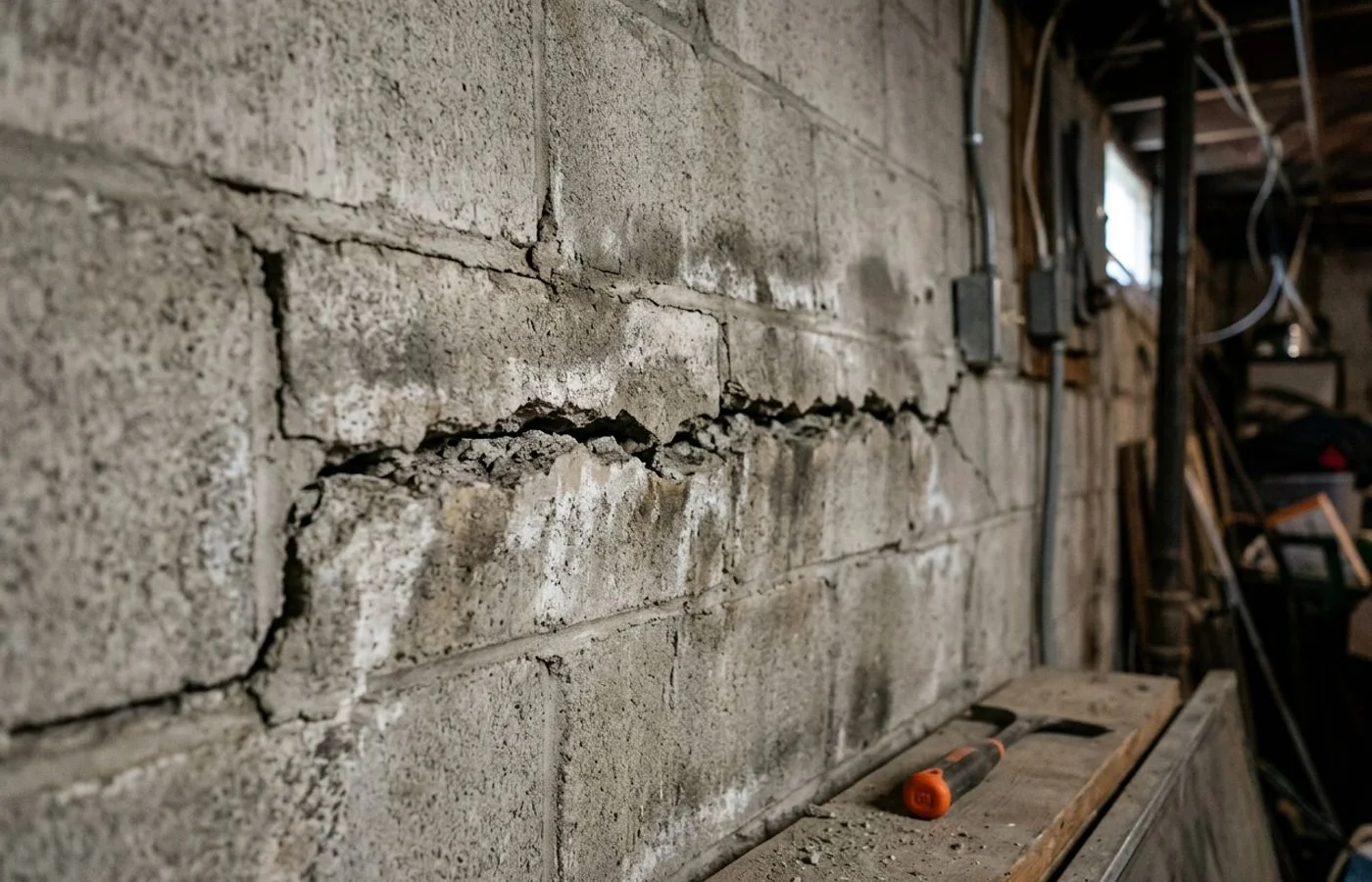
- A horizontal crack ran the length of the wall about three feet above the floor
- Vertical stair-step cracks at both corners tied into the horizontal
- The wall face was bowing inward by roughly one and one quarter inches at midspan
- Outside, the grade was flat and holding water against the wall after storms
That combination is textbook. Hydrostatic pressure from saturated clay pushing on the wall, plus the horizontal freeze-thaw stress line. It was not catastrophic yet, but it was moving.
The right call was carbon fiber straps combined with exterior drainage correction. Not a full anchor system. Not a rebuild. If we had shown up to sell, this is where the pressure would have started. Instead we walked the homeowner through the diagnosis and gave her the same explanation you would get if you asked us to teach a class on it.
The engineered plan
The plan we submitted for MABCD-permitting was straightforward.
- Install six carbon fiber straps at four foot spacing across the north wall
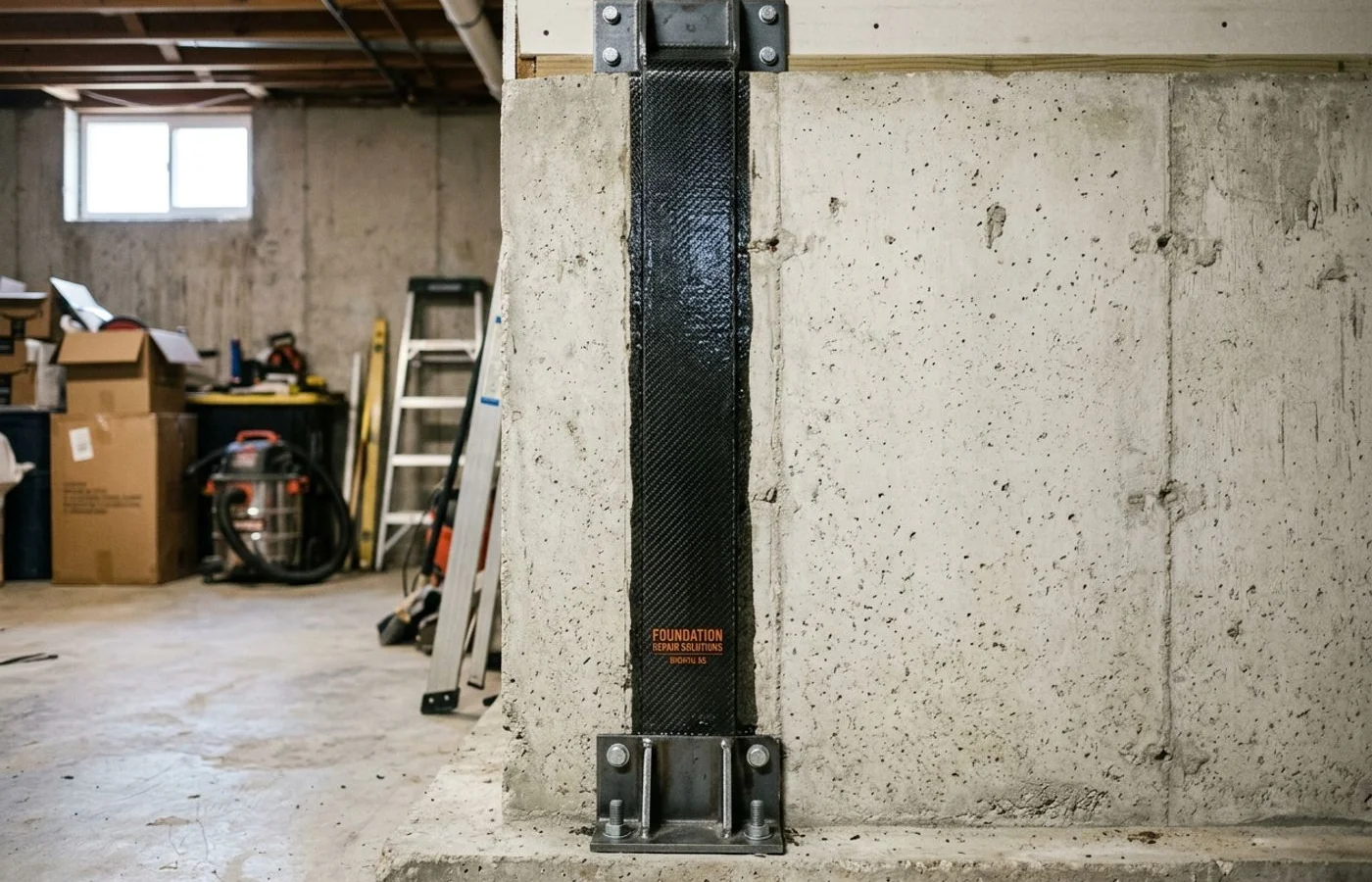
- Anchor top and bottom with sill plate connectors and footing anchors
- Correct exterior grading in the affected zone away from the wall
- Extend the two nearest downspouts to move roof water away from the corner
Total time on site was scheduled for two days. Total cost came in about a fifth of what a wall rebuild would have run.
If you want the background on why we chose carbon fiber over wall anchors here, our bowing basement wall repair guide walks through the decision tree.
The install
Day one was surface prep and adhesive bonding. We ground the paint and coating off the wall at each strap location, cleaned the surface, and bonded the straps with structural epoxy. Anchor plates went in top and bottom.
Day two was grading correction outside. Our crew regraded the affected wall zone away from the house, extended the two downspouts, and cleaned up the site. Total time from arrival to final walkthrough was under thirty hours.
The post-storm check
Two weeks later Derby got hit with the kind of storm that reveals every flaw in a fix. We came back on our own to check the wall.
- No new movement at the crack line
- No visible bowing beyond the pre-repair baseline
- No water tracking behind the corrected grade
- Downspout runs holding at full capacity
The wall was doing exactly what carbon fiber straps and good drainage let it do: hold.
Why this case matters
Two things about this job are worth repeating.
First, most bowing wall calls in Derby are fixable without a rebuild. Early-to-moderate bowing responds well to carbon fiber. Severe bowing needs anchors or beams. Neither of those is a rebuild.
Second, the fear of the sales pitch is real and often justified. A homeowner should not have to steel herself for a fight just to get a straight read on a structural problem. We do not run our shop that way, and it is the reason we get referred inside neighborhoods after jobs like this one.
If you are seeing a horizontal crack, a bowing wall, or a stair-step pattern in brick or block, do not wait for the next spring storm. Get a free on-site foundation inspection. If it needs a fix, we will tell you the smallest fix that actually holds.
If it is cosmetic, we will tell you that too, and walk out without invoicing you a dime.